

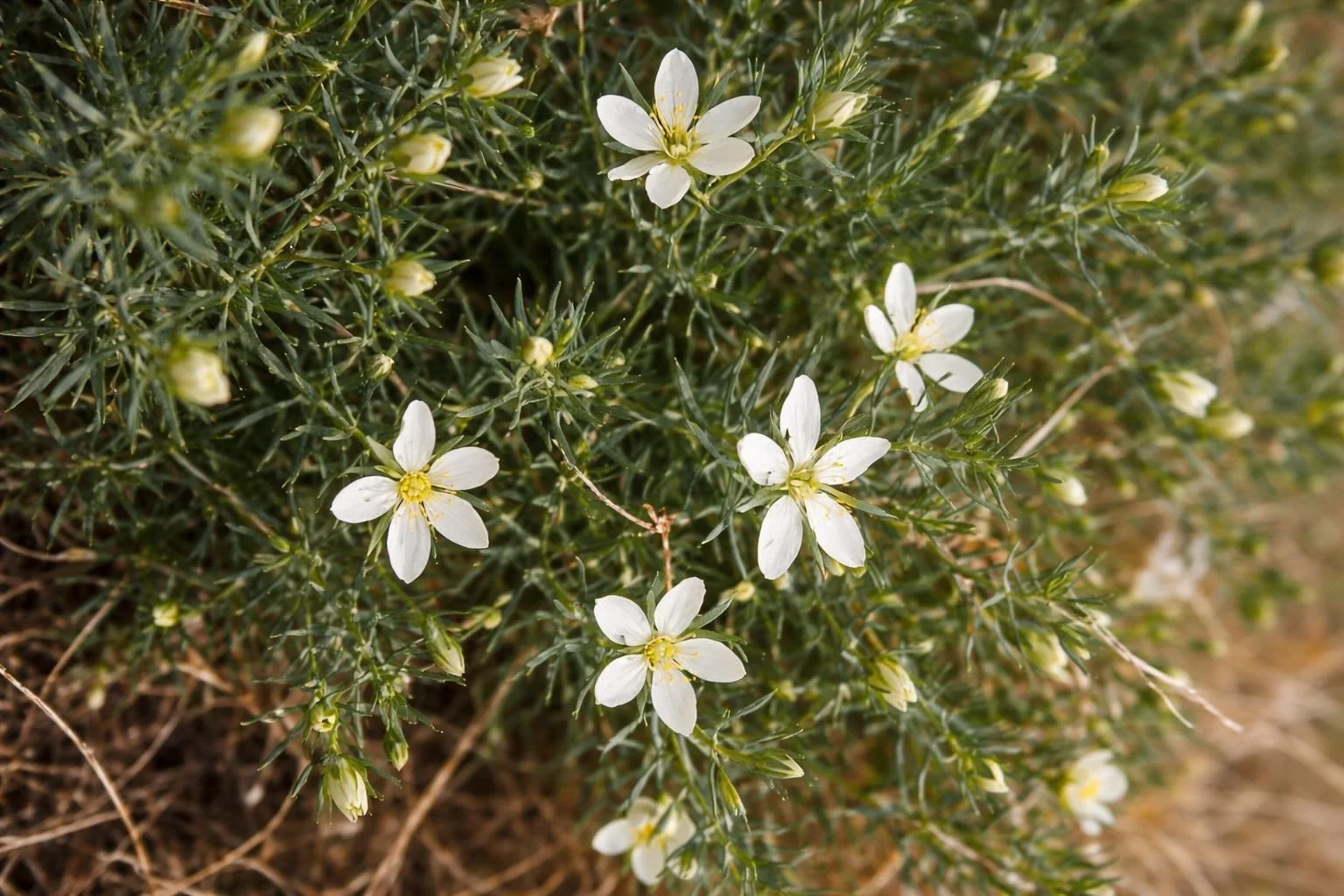
Is Syrian Rue Legal in Canada?
No. Syrian rue contains the beta-carboline alkaloids harmaline and harmalol, which are both illegal in Canada under Schedule III of the Controlled Drugs and Substances Act.
Syrian Rue can only be used legally in cases where Health Canada grants a s. 56 exemption request.
What is Syrian Rue?
Syrian rue (Peganum harmala) is also known as wild rue, African rue, harmal, espand, or spand. It is a psychoactive plant historically used in rituals and traditional medicine, particularly in Central Asia, the Middle East, and Azerbaijan.
One study found that Syrian rue was being deliberately used for its psychoactive properties as early as 2,700 years ago. It is still used in traditional medicine today for its psychoactive properties, and in Iranian culture, the seeds are burned for spiritual purposes. Recreational use appears to be increasingly common.
Syrian rue is rich in psychoactive alkaloids called beta-carbolines which are said to induce a dream-like state somewhere between sleep and wakefulness. When consumed at low doses, it has hallucinogenic and stimulant effects. The seeds are the most commonly used part of the plant, as they contain the highest concentration of alkaloids – however, the roots and stems can also be used.
Medical or Therapeutic Use?
One study suggested that Syrian rue may have therapeutic potential for treating anxiety and depression.
Anecdotally, the plant is also used to treat nervous system disorders (such as Parkinson’s disease), diabetes, and hypotension.
However, overconsumption can have serious side effects impacting the nervous system, heart, liver, and kidneys. Overdoses can be life-threatening and could result in death.
Stay updated on the firm’s work and psychedelic law developments in Canada and elsewhere.